Best AI Tools for Website Personalization
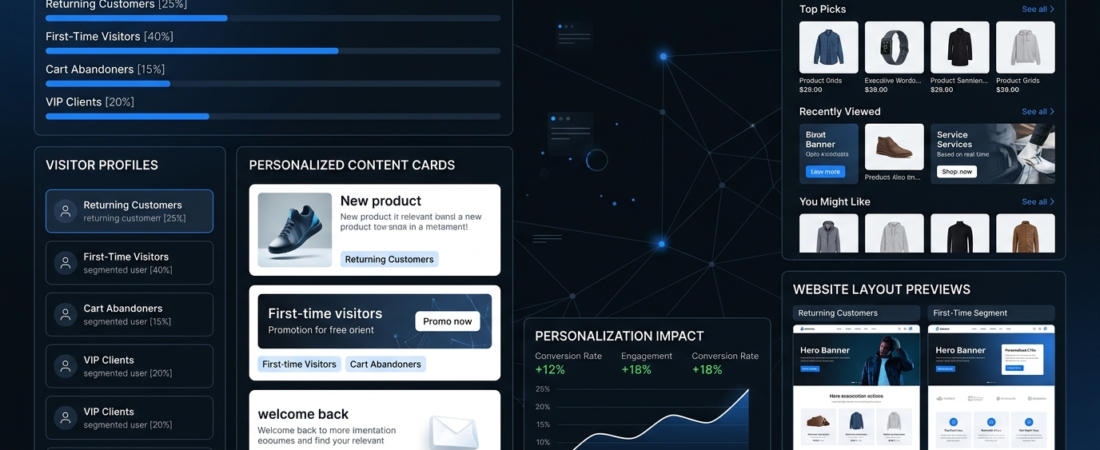
AI tools for website personalization help businesses create more relevant website experiences for different visitors. Instead of showing every visitor the same content, businesses can use personalization software to adapt recommendations, messages, page elements, and offers based on available information and user behavior.
For example, an online store might display product recommendations based on a visitor’s browsing activity. A software company could show different landing page messages to visitors interested in different services.
The right approach depends on your website, audience, privacy requirements, and marketing goals. In this guide, we’ll compare seven website personalization tools and explain how to choose one for your business.
What Are AI Tools for Website Personalization?
AI tools for website personalization use artificial intelligence, automation, analytics, or rules-based targeting to tailor website experiences to different audiences.
Depending on the platform, these tools may help businesses:
- Recommend relevant products or content.
- Customize website messages for different audience segments.
- Test different landing page experiences.
- Analyze visitor behavior and engagement.
- Personalize website journeys using available customer data.
- Improve the relevance of calls to action and recommendations.
Not every platform uses AI in the same way. Some specialize in experimentation and optimization, while others focus on customer data, recommendations, or personalized marketing campaigns.
7 Best AI Tools for Website Personalization
1. Optimizely — Best for Website Experimentation and Personalization
Optimizely offers digital experience and experimentation capabilities that help businesses test website changes and deliver tailored experiences.
Its platform can support experimentation, audience targeting, and personalization workflows, depending on the products and features selected.
Key features:
- Website experimentation
- Audience targeting
- Personalized digital experiences
- Content and experience optimization
- Results measurement
Best for: Marketing and digital teams that want to test different website experiences and improve performance.
Potential drawback: The platform may require technical implementation and a larger budget than a small website needs.
2. VWO — Best for Conversion Optimization
VWO provides experimentation and conversion optimization tools that businesses can use to test website changes and understand how visitors respond.
Its testing and personalization capabilities depend on the selected product and configuration.
Key features:
- A/B testing
- Website experience analysis
- Conversion optimization
- Audience targeting options
- Experiment reporting
Best for: Businesses that want to improve landing pages, sign-up forms, product pages, or checkout experiences.
Potential drawback: Results depend on traffic levels, experiment design, and the quality of the data collected.
3. Dynamic Yield — Best for Personalized Customer Experiences
Dynamic Yield focuses on experience personalization across digital channels. Businesses can use its capabilities to tailor recommendations, content, and offers based on customer information and behavior.
Key features:
- Personalized content and offers
- Product recommendations
- Audience segmentation
- Experience experimentation
- Cross-channel personalization capabilities
Best for: Retailers and larger businesses that need personalized digital experiences across customer touchpoints.
Potential drawback: Implementation can be more complex than simpler website tools, especially when several data sources are involved.
4. Adobe Target — Best for Enterprise Personalization
Adobe Target is designed for experimentation and personalization. It can help businesses deliver and test different digital experiences for selected audiences.
Its suitability depends on the organization’s existing systems, data, and technical resources.
Key features:
- A/B testing
- Experience targeting
- Personalization workflows
- Experiment analysis
- Integration with supported digital marketing tools
Best for: Enterprise businesses with established digital marketing and analytics operations.
Potential drawback: Setup, integration, and licensing may be demanding for smaller teams.
5. Insider — Best for Connected Customer Journeys
Insider provides customer experience and marketing personalization capabilities across supported digital channels. Businesses can use its platform to coordinate personalized messages and experiences using available customer data.
Key features:
- Audience segmentation
- Personalized campaigns
- Customer journey orchestration
- Product and content recommendations
- Cross-channel engagement tools
Best for: Businesses that want to connect website personalization with broader marketing and customer engagement workflows.
Potential drawback: The value depends on data quality, available integrations, and the organization’s implementation needs.
6. Personyze — Best for Website Content Personalization
Personyze focuses on website personalization, helping businesses tailor content and website experiences to different visitor segments.
Depending on the configuration, businesses can use it to display different messages or recommendations to selected audiences.
Key features:
- Website content personalization
- Audience segmentation
- Targeted messages and offers
- Personalized recommendations
- Website experience customization
Best for: Businesses that want a dedicated website personalization solution without building every workflow from scratch.
Potential drawback: Evaluate the available integrations, targeting options, and pricing to make sure they match your website’s requirements.
7. Mutiny — Best for B2B Website Personalization
Mutiny focuses on website personalization for business-to-business marketing. It can help B2B teams tailor website experiences for target accounts and business audiences, depending on their data and configuration.
Key features:
- B2B website personalization
- Account-based experiences
- Audience targeting
- Landing page customization
- Marketing workflow support
Best for: B2B marketing teams that want to make website experiences more relevant to business prospects.
Potential drawback: Its specialized focus may not suit general-purpose blogs or small online stores that need basic personalization.
AI Tools for Website Personalization Compared
| Tool | Best use | Main strength |
|---|---|---|
| Optimizely | Experimentation and personalization | Testing digital experiences |
| VWO | Conversion optimization | Website experiments |
| Dynamic Yield | Customer experience personalization | Recommendations and targeting |
| Adobe Target | Enterprise personalization | Experience testing and targeting |
| Insider | Connected customer journeys | Cross-channel personalization |
| Personyze | Website content personalization | Targeted website experiences |
| Mutiny | B2B website personalization | Account-focused experiences |
Features, integrations, AI capabilities, and pricing can change. Confirm the current offering before choosing a platform.
How AI Tools for Website Personalization Work
1. Collect Relevant Information
A personalization system may use permitted information such as the page a visitor is viewing, selected preferences, or interactions with website content.
Businesses should collect only the data they need and follow applicable privacy and consent requirements.
2. Organize Visitors Into Useful Groups
Some platforms allow businesses to create audience segments based on relevant behavior, interests, or customer attributes.
For example, a software company might create different website experiences for visitors exploring its free plan and visitors researching enterprise features.
3. Deliver a Relevant Experience
Depending on the tool, businesses can display different content, recommendations, messages, or page elements to selected audiences.
The objective is to make the experience more useful—not to overwhelm visitors with unnecessary targeting.
4. Measure the Results
Businesses can compare engagement, sign-ups, purchases, or other meaningful outcomes. Where appropriate, controlled experiments help determine whether personalization actually improves performance.
How to Choose the Best AI Tools for Website Personalization
1. Define Your Main Goal
Decide what you want to improve. An online store may prioritize product recommendations, while a B2B website may focus on relevant landing pages and qualified enquiries.
2. Check Your Website Platform
Confirm whether the tool works with your current website technology, analytics setup, and marketing systems. This is especially important if your site uses WordPress or several third-party plugins.
3. Review AI and Targeting Features
Check which features are genuinely AI-powered and which use predefined rules or standard experimentation. Choose capabilities that solve a specific problem rather than paying for features you will not use.
4. Consider Your Traffic Levels
Some personalization strategies need sufficient visitor data to evaluate results reliably. If your website has limited traffic, begin with straightforward improvements and gather evidence before introducing complex experiments.
5. Compare Costs and Privacy Controls
Review subscription fees, implementation costs, data storage, integrations, and usage limits. Also check consent management, data access, and retention controls before collecting visitor information.
For more ideas about improving digital marketing workflows, explore AI marketing tools on Aiventa Guide.
Benefits of AI Tools for Website Personalization
More Relevant Content
Personalization can help visitors discover content, products, or services that match their interests.
Improved User Experience
A thoughtfully personalized website can reduce irrelevant choices and help visitors find useful information more easily.
Better Experimentation
Testing different website experiences can help businesses learn which changes work for their audiences.
More Focused Marketing
Audience segmentation can help businesses create more relevant messages for different customer groups.
Useful Behavioral Insights
Analytics can help teams understand how people interact with personalized experiences and identify areas that need improvement.
However, personalization does not guarantee more sales or engagement. Poor targeting, inaccurate data, or intrusive messages can make the experience worse. Test changes carefully and respect visitor privacy.
Frequently Asked Questions
What are the best AI tools for website personalization?
Optimizely, VWO, Dynamic Yield, Adobe Target, Insider, Personyze, and Mutiny are options worth evaluating. The best choice depends on your website, budget, audience, and personalization goals.
Can AI personalize a WordPress website?
Yes. Depending on your requirements, you can use compatible personalization, analytics, or experimentation tools alongside WordPress. Check plugin compatibility, site performance, and privacy implications before installing anything.
Is website personalization useful for small businesses?
It can be. Small businesses can start with relevant content recommendations, simple audience segments, or targeted landing pages. More advanced platforms may be unnecessary until the website has enough traffic and a clear personalization goal.
Does website personalization improve conversions?
It may improve conversions when the experience addresses real visitor needs. Results depend on the audience, offer, website quality, and implementation, so measure performance rather than assuming personalization will work.
Is AI website personalization safe for visitor privacy?
It can be implemented responsibly, but businesses must consider the information they collect, consent requirements, access controls, and applicable privacy laws. Avoid collecting unnecessary personal data.
Conclusion
AI tools for website personalization can help businesses deliver more relevant digital experiences, test different website approaches, and better understand visitor behavior.
Optimizely and VWO are worth considering for experimentation, Dynamic Yield and Adobe Target for more advanced personalization needs, Insider for connected customer journeys, Personyze for website content personalization, and Mutiny for B2B marketing.
Start with a clear objective, choose a tool that matches your website and budget, and measure the results. Effective personalization should make the website more useful for visitors while respecting their privacy.
Explore more guides on Aiventa Guide: AI automation tools and AI tools for small business.
Useful Website Personalization Resources
- Optimizely — Explore digital experience experimentation and personalization solutions.
- VWO — Learn about website testing and conversion optimization tools.