Best AI Tools for Competitor Analysis
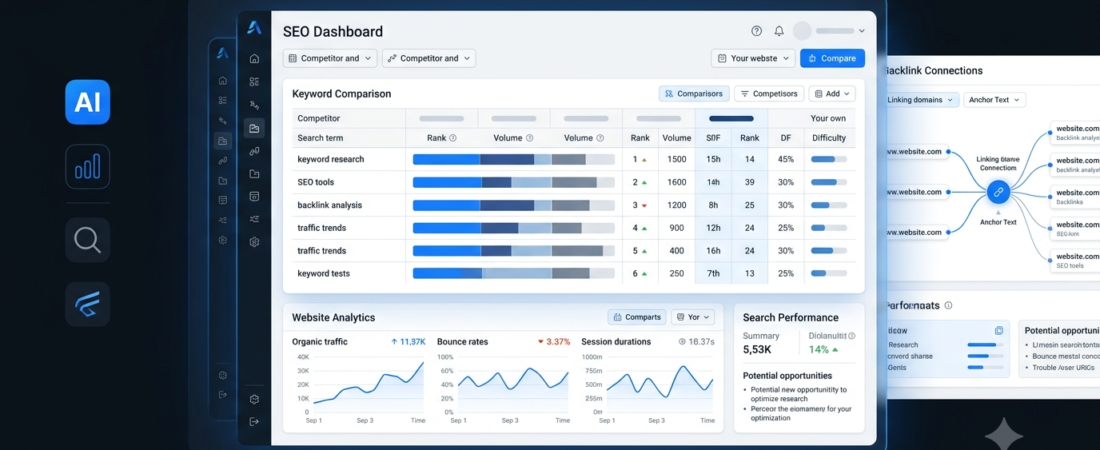
AI tools for competitor analysis help businesses, bloggers, and marketers understand what other websites are doing to attract customers and search traffic. These tools can uncover keyword opportunities, analyze backlinks, compare website performance, and reveal content gaps that may be worth exploring.
For example, if another AI blog receives traffic from a topic you have not covered, competitor research can help you discover that opportunity. You can then create a more useful article that answers the reader’s question better.
However, competitor analysis is not about copying other websites. It is about learning from available data and identifying ways to offer something more valuable.
In this guide, we’ll compare seven AI tools for competitor analysis, explain their strengths, and show you how to choose the right option for your website or business.
What Are AI Tools for Competitor Analysis?
AI tools for competitor analysis use artificial intelligence, SEO data, analytics, and automation to help users research competing websites and businesses.
Depending on the platform, these tools can help you:
- Discover keywords competitors rank for.
- Identify content gaps and new article ideas.
- Examine competitor backlink profiles.
- Estimate website traffic and traffic sources.
- Compare search visibility across websites.
- Review paid advertising strategies.
- Organize research into reports and actionable insights.
Not every tool is entirely AI-powered. Some combine conventional SEO databases with AI-assisted analysis, so always check which features are actually included.
7 Best AI Tools for Competitor Analysis
1. Semrush — Best for All-in-One Competitor Research
Semrush offers competitor research features for examining organic keywords, paid search, backlinks, traffic trends, and competing websites. Its available tools can help marketers identify gaps between their websites and competitors.
Key features:
- Competitor keyword research
- Organic search visibility analysis
- Backlink gap research
- Traffic and advertising insights
- AI visibility research in supported products
Best for: Bloggers, SEO professionals, agencies, and businesses that want multiple research functions in one platform.
Potential drawback: Advanced features may require a paid subscription, and traffic figures are estimates rather than exact competitor analytics.
2. Ahrefs — Best for Keywords and Backlinks
Ahrefs provides SEO research tools for examining competitor websites, organic search performance, backlinks, and content opportunities. Its Site Explorer can help users investigate which pages attract search visibility and which websites link to a competitor.
Key features:
- Competitor website analysis
- Keyword research
- Backlink profile exploration
- Top-page discovery
- Rank tracking and SEO reporting
Best for: Website owners who want to understand competitor rankings, discover content opportunities, and research backlinks.
Potential drawback: Advanced research may require a paid plan, and interpreting the data takes practice.
3. Similarweb — Best for Website Traffic Research
Similarweb focuses on digital market intelligence and website traffic estimates. It can help users compare websites and investigate traffic channels, audience patterns, and market trends where data is available.
Key features:
- Estimated website traffic
- Traffic source comparisons
- Market and industry research
- Audience insights
- Competitor benchmarking
Best for: Businesses that want a broader view of competitor traffic and digital market positioning.
Potential drawback: Estimates and available details vary by website, market, and subscription.
4. SE Ranking — Best for SEO Competitor Tracking
SE Ranking offers SEO tools that can help users monitor keyword rankings, research competing domains, and evaluate website performance.
Key features:
- Competitor SEO research
- Keyword tracking
- Website audits
- Backlink analysis
- SEO reporting
Best for: Freelancers, smaller businesses, and website owners who want several SEO workflows in one platform.
Potential drawback: Available data and limits depend on the chosen plan and target market.
5. SpyFu — Best for Competitor Keyword and Ad Research
SpyFu focuses on competitor search marketing research, including organic keywords and paid search advertising information.
Key features:
- Competitor keyword research
- Paid search keyword discovery
- Advertising history where available
- Domain comparisons
- Search marketing insights
Best for: Marketers who want to investigate how competing websites approach organic search and paid search campaigns.
Potential drawback: Coverage and usefulness can vary by industry, country, and the amount of data available.
6. BuzzSumo — Best for Content Competitor Research
BuzzSumo helps users research content performance, discover popular topics, and identify content that attracts engagement or shares across supported sources.
Key features:
- Content discovery
- Topic research
- Content trend monitoring
- Research into influential publishers and authors
- Content performance insights
Best for: Bloggers, publishers, and content marketers who want to understand which topics attract attention.
Potential drawback: Content engagement is not the same as Google search rankings, so combine this research with SEO analysis.
7. Moz Pro — Best for Practical SEO Analysis
Moz Pro provides SEO research tools that can help website owners study keyword opportunities, track rankings, examine links, and review website issues.
Key features:
- Keyword research
- Rank tracking
- Link analysis
- Site auditing
- Competitor SEO comparisons
Best for: Bloggers and small businesses that want structured SEO research and website monitoring.
Potential drawback: Compare its available features and data limits with other SEO platforms before committing to a subscription.
AI Tools for Competitor Analysis Compared
| Tool | Best use | Main strength |
|---|---|---|
| Semrush | Broad competitor research | Multiple marketing research features |
| Ahrefs | Keywords and backlinks | SEO and link analysis |
| Similarweb | Website traffic research | Digital market intelligence |
| SE Ranking | SEO tracking | Rankings and competitor research |
| SpyFu | Search advertising research | Organic and paid keyword insights |
| BuzzSumo | Content research | Topic and content discovery |
| Moz Pro | Practical SEO workflows | Keywords, links, and site audits |
Features, prices, free access, and data limits can change. Review current plans before selecting a platform.
How to Use AI Tools for Competitor Analysis
Step 1: Identify Your Real Search Competitors
Your competitors are not necessarily the biggest websites in your industry. Start with websites that appear in Google results for the topics you want to target.
For a website about AI software, these might include tool comparison blogs, software review websites, and specialist technology publishers.
Step 2: Find Competitor Keywords
Look for search terms that competing pages target and identify relevant topics your website has not covered.
Do not automatically choose every keyword you discover. Prioritize search intent, relevance, and whether you can create a genuinely helpful article.
Step 3: Review Their Top Pages
Study the structure and usefulness of competing pages. Look for questions they answer, comparisons they include, and information readers may still need.
Use this research to improve your own article rather than reproducing another site’s content.
Step 4: Analyze Backlinks and Content Gaps
Competitor backlink research can reveal websites that reference useful resources in your niche. Content gap analysis can highlight subjects competitors cover that your website has not addressed.
For more SEO ideas, explore our guide to AI marketing tools.
Step 5: Build an Action Plan
Turn your findings into a manageable list of improvements, such as updating an existing article, publishing a missing comparison, improving internal links, or making a page easier to navigate.
Track your own results in Google Search Console rather than relying only on third-party competitor estimates.
How to Choose the Best AI Tools for Competitor Analysis
Choose Based on Your Goal
- Keyword and backlink research: Consider Semrush or Ahrefs.
- Traffic and market research: Consider Similarweb.
- SEO monitoring: Consider SE Ranking or Moz Pro.
- Paid search research: Consider SpyFu.
- Content discovery: Consider BuzzSumo.
Consider Your Budget
Start with free features and tools you already have access to. Paid software is not essential for every website, especially when you are still developing your content strategy.
Check Data Coverage
Confirm that the tool covers your target country, industry, and keywords. A platform’s results may differ depending on its database and available data.
Use AI as an Assistant
AI can summarize research and suggest patterns, but verify important claims and figures. Your decisions should be based on evidence, relevance, and your audience’s needs.
For additional guidance, read how to choose AI tools.
Benefits of AI Competitor Analysis Tools
Discover New Content Opportunities
Competitor research can reveal relevant subjects and questions your website has not covered yet.
Improve Your SEO Strategy
Keyword and page comparisons can help you identify where to improve existing content or create new resources.
Understand Market Trends
Traffic and content research can offer clues about changing interests in your industry.
Save Research Time
Automation and AI-assisted summaries can make it easier to organize large amounts of information, although important findings still need human review.
Make Better Marketing Decisions
Combining competitor research with your own performance data can help you prioritize the changes most relevant to your goals.
Remember, using these tools does not guarantee higher rankings or traffic. Results depend on content quality, technical SEO, competition, and many other factors.
Frequently Asked Questions
What are the best AI tools for competitor analysis?
Semrush, Ahrefs, Similarweb, SE Ranking, SpyFu, BuzzSumo, and Moz Pro are useful options to compare. The best choice depends on whether you need keyword research, backlink analysis, traffic estimates, or content research.
Can I analyze competitors for free?
Yes. You can begin with free SEO resources, Google Search, and the free features offered by some research platforms. Free access may have usage limits.
Can AI tools show a competitor’s exact website traffic?
Usually not. Third-party platforms generally provide estimates based on their available data and models. Website owners can access more direct analytics for properties they control.
How often should I perform competitor analysis?
Review important competitors regularly and whenever you plan a major content update or new strategy. Smaller websites can start with a monthly review and adjust based on their needs.
Are competitor analysis tools useful for new blogs?
Yes. They can help new blogs identify relevant topics, understand search results, and find gaps worth covering. However, new websites should also focus on indexing, helpful content, internal links, and technical SEO.
Conclusion
AI tools for competitor analysis can help bloggers, marketers, and businesses understand competing websites and find opportunities for improvement.
Semrush and Ahrefs offer broad SEO research, Similarweb focuses on traffic intelligence, SE Ranking and Moz Pro support SEO workflows, SpyFu helps with search advertising research, and BuzzSumo supports content discovery.
Start with one clear goal, research relevant competitors, verify the data, and turn your findings into useful content. The aim is not to copy competitors—it is to provide a better experience and more helpful answers for your audience.
Explore more guides on Aiventa Guide: AI marketing tools and AI tools for small business.
Useful Competitor Research Resources
- Semrush Competitor Analysis — Explore competitor keywords, backlinks, traffic insights, and search visibility.
- Ahrefs SEO Tools — Explore SEO research tools for keywords, backlinks, rankings, and competitor websites.