
AI Pricing Tools: 7 Tools for Smarter Pricing
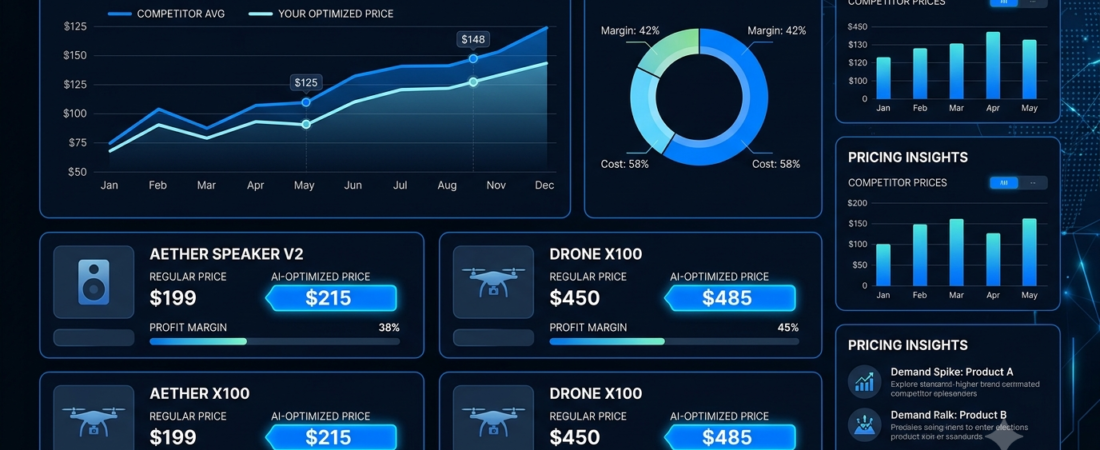
AI pricing tools help businesses analyze market information, evaluate pricing patterns, and make more informed decisions about what to charge for products or services. Instead of relying only on spreadsheets and manual competitor checks, businesses can use pricing software to review data and identify opportunities.
Pricing affects profit margins, sales, and customer perception. A price that is too high may discourage buyers, while a price that is too low can reduce profitability. The right approach depends on costs, customer demand, competition, and business goals.
In this guide, we compare seven pricing platforms, explain their main uses, and show how to choose a suitable solution for your business.
What Are AI Pricing Tools?
AI pricing tools are software platforms that use analytics, automation, machine learning, or optimization models to support pricing decisions.
Depending on the product, they can help businesses:
- Monitor competitor prices.
- Analyze historical sales and demand.
- Recommend price adjustments.
- Evaluate product-level profitability.
- Manage prices across large catalogs.
- Test different pricing strategies.
- Track pricing performance over time.
Some platforms focus on ecommerce repricing, while others are designed for retail, travel, manufacturing, or subscription businesses. Not every platform uses AI in the same way, so check its actual features before choosing one.
7 AI Pricing Tools to Consider
1. Pricefx — Enterprise Price Optimization
Pricefx provides pricing software for businesses that need to manage pricing processes, analyze commercial data, and support price optimization.
Best for: Mid-sized and large businesses with complex pricing requirements.
Key benefits:
- Supports pricing analysis and optimization workflows.
- Helps manage pricing processes.
- Offers capabilities for commercial pricing teams.
- Can support pricing decisions across complex product catalogs.
Potential limitation: Implementation and configuration may require specialist support, particularly in organizations with multiple pricing systems.
2. PROS — Pricing and Revenue Optimization
PROS offers pricing and revenue management software for industries that need to make data-informed commercial decisions.
Best for: Businesses with complex pricing and revenue management needs.
Key benefits:
- Supports pricing decision workflows.
- Helps analyze relevant commercial data.
- Offers solutions for selected industries.
- Can help teams manage pricing at scale.
Potential limitation: Product suitability and implementation requirements vary by industry, company size, and existing systems.
3. Competera — Retail Pricing Intelligence
Competera focuses on retail pricing intelligence and price optimization. Retailers can use pricing data and analytical capabilities to support decisions about product prices and competitive positioning.
Best for: Retailers managing large product catalogs.
Key benefits:
- Supports competitive pricing analysis.
- Helps evaluate product-level pricing decisions.
- Provides pricing analytics capabilities.
- Can support retail pricing workflows.
Potential limitation: Results depend on data quality, catalog matching, and the pricing rules configured by the retailer.
4. Omnia Retail — Ecommerce Pricing Optimization
Omnia Retail offers pricing software for ecommerce and retail businesses. Its capabilities can help retailers analyze market conditions and manage pricing strategies across products.
Best for: Online retailers that regularly review competitor prices.
Key benefits:
- Supports ecommerce pricing workflows.
- Helps monitor market pricing information.
- Offers rules for managing price changes.
- Helps retailers organize pricing decisions.
Potential limitation: Businesses should confirm supported marketplaces, data sources, integrations, and plan features.
5. Prisync — Competitor Price Tracking
Prisync focuses on competitor price tracking and pricing intelligence for ecommerce businesses. It can help merchants monitor competitor prices and review market positioning.
Best for: Small and growing ecommerce stores.
Key benefits:
- Helps track competitor pricing.
- Supports product-level price monitoring.
- Provides pricing reports.
- Can help identify price differences in a market.
Potential limitation: Competitor monitoring alone does not determine the ideal selling price. Businesses must still account for costs, margins, and customer demand.
6. PriceLabs — Dynamic Pricing for Accommodation
PriceLabs provides dynamic pricing and revenue management tools primarily for short-term rentals and related accommodation businesses.
Best for: Property managers and short-term rental operators.
Key benefits:
- Helps evaluate pricing based on market conditions.
- Supports dynamic pricing workflows.
- Offers tools for managing property pricing.
- Can reduce the need for repeated manual adjustments.
Potential limitation: Pricing recommendations should be evaluated against local demand, operating costs, property requirements, and business objectives.
7. RepricerExpress — Marketplace Repricing
RepricerExpress focuses on automated repricing for supported ecommerce marketplaces. Sellers can use repricing rules to respond to competitive changes within their configured limits.
Best for: Marketplace sellers who need to manage prices across many listings.
Key benefits:
- Supports automated repricing rules.
- Helps manage large product catalogs.
- Reduces repetitive manual price updates.
- Can help sellers respond more consistently to competitor changes.
Potential limitation: Repricing rules need careful configuration to avoid undesirable price changes or reduced profit margins.
AI Pricing Tools Compared
| Tool | Main focus | Best suited for |
|---|---|---|
| Pricefx | Enterprise price optimization | Complex business pricing |
| PROS | Pricing and revenue management | Larger commercial teams |
| Competera | Retail price intelligence | Retailers |
| Omnia Retail | Ecommerce pricing | Online retailers |
| Prisync | Competitor price tracking | Ecommerce stores |
| PriceLabs | Dynamic accommodation pricing | Rental and property managers |
| RepricerExpress | Marketplace repricing | Marketplace sellers |
This is a practical overview, not a universal ranking. These platforms serve different industries, and some specialize in pricing analytics rather than fully automated AI pricing.
How AI Pricing Tools Improve Business Decisions
1. Monitor Competitor Prices
Pricing tools can help businesses monitor competitor prices across supported products and channels. This gives teams more visibility into market positioning.
However, matching the lowest competitor price is not always the best strategy. Costs, service quality, availability, and customer expectations also matter.
2. Support Demand-Based Pricing
Some platforms use historical data and market signals to support price adjustments. For example, an accommodation provider may review seasonal demand before setting nightly rates.
Recommendations should be reviewed against business goals and applicable pricing rules.
3. Protect Profit Margins
A good pricing strategy considers more than the selling price. Businesses should account for product costs, shipping, platform fees, discounts, returns, and other expenses.
Pricing software can help organize these inputs, but businesses need accurate cost data to make useful decisions.
4. Manage Large Product Catalogs
When a store sells hundreds or thousands of products, checking each price manually can be difficult. Automated rules and monitoring can help teams manage changes more consistently.
For related ecommerce strategies, explore our guide to AI tools for small business.
How to Choose the Right AI Pricing Tools
Before selecting a platform, evaluate these factors.
1. Define your pricing goal. Decide whether you need competitor monitoring, marketplace repricing, demand forecasting, or enterprise price optimization.
2. Check integrations. Confirm compatibility with your ecommerce platform, marketplace, inventory system, and reporting tools.
3. Set margin limits. Make sure pricing rules account for costs and minimum acceptable margins.
4. Review data coverage. Check how the platform collects competitor prices, handles product matching, and updates information.
5. Compare automation controls. Look for approval workflows, configurable rules, and safeguards against unwanted price changes.
6. Calculate total costs. Consider subscriptions, catalog limits, implementation, and ongoing maintenance.
7. Test before expanding. Start with a small group of products and compare the tool’s recommendations with your existing pricing approach.
For broader software-selection advice, read our guide to how to choose AI tools.
Common Pricing Automation Mistakes
AI pricing software is most useful when the business sets clear rules and reviews its results.
- Competing only on price: The lowest price may not produce the best profit.
- Ignoring product costs: Include fees, shipping, returns, and discounts.
- Trusting incomplete data: Incorrect competitor matches can lead to poor decisions.
- Making changes without safeguards: Set minimum and maximum prices where appropriate.
- Ignoring customer expectations: Frequent or unexplained price changes may affect trust.
- Failing to review results: Track margins, sales, and customer responses after changes.
Businesses should also avoid price coordination with competitors and review applicable competition and consumer protection laws. Automated pricing must be designed and used responsibly.
Frequently Asked Questions
What are AI pricing tools used for?
They help businesses analyze pricing data, monitor competitors, manage repricing rules, and support decisions about product or service prices.
Can AI pricing tools increase profits?
They may help businesses make better-informed pricing decisions, but profit increases are not guaranteed. Results depend on costs, demand, competition, data quality, and how the recommendations are used.
Are AI pricing tools suitable for small businesses?
Yes. A small online store may benefit from competitor price monitoring or simple repricing software. Larger enterprise systems may be unnecessary if the product catalog and pricing process are straightforward.
What is the difference between dynamic pricing and repricing?
Dynamic pricing adjusts prices in response to factors such as demand or market conditions. Repricing usually refers to changing prices according to competitor prices or predefined rules. Some platforms support both approaches.
Should businesses automate every price change?
Not necessarily. Businesses should set safeguards, monitor results, and use human approval for sensitive or high-impact changes when appropriate.
Conclusion
AI pricing tools can help businesses monitor competitors, analyze market information, manage product catalogs, and support more consistent pricing decisions.
Pricefx and PROS address complex pricing needs, while Prisync focuses on competitor price tracking. Omnia Retail and RepricerExpress can be relevant for ecommerce sellers, and PriceLabs specializes in accommodation pricing.
The best choice depends on your industry, data, pricing goals, and budget. Start with a clear objective, test a limited set of products, and monitor profitability before expanding automation.
Explore Aiventa Guide for more practical AI software guides covering business, ecommerce, productivity, and automation.
Useful Resources
- Official Pricefx website: https://www.pricefx.com/
- Official Prisync website: https://prisync.com/